How does Instagram know my network?
12/19/2025
If you have used Instagram, or Facebook, or Twitter, or TikTok—okay, pretty much any social media.
Then you would have been suggested accounts to follow.
Now, I’m talking from the perspective of using a “personal account,” but there has most definitely been a time where you were suggested an account to follow, and your reaction was:
“How the f***?!”
Because, indeed, how the f*** did this app (let’s go with Instagram for the rest of this blog) know I knew this person?
Writing it out now, it can definitely seem creepy—and a bit weird. But it will have come down to data you probably willingly shared with Instagram, along with some magical machine learning…
Step 1 - Candidate Generation
There are probably over a billion accounts on Instagram.
Trying to figure out which one you most likely know or would likely follow would be extremely difficult.
To make it easier, Instagram tries to get a smaller selection of accounts, in the hundreds or thousands, before deciding to suggest anything to you.
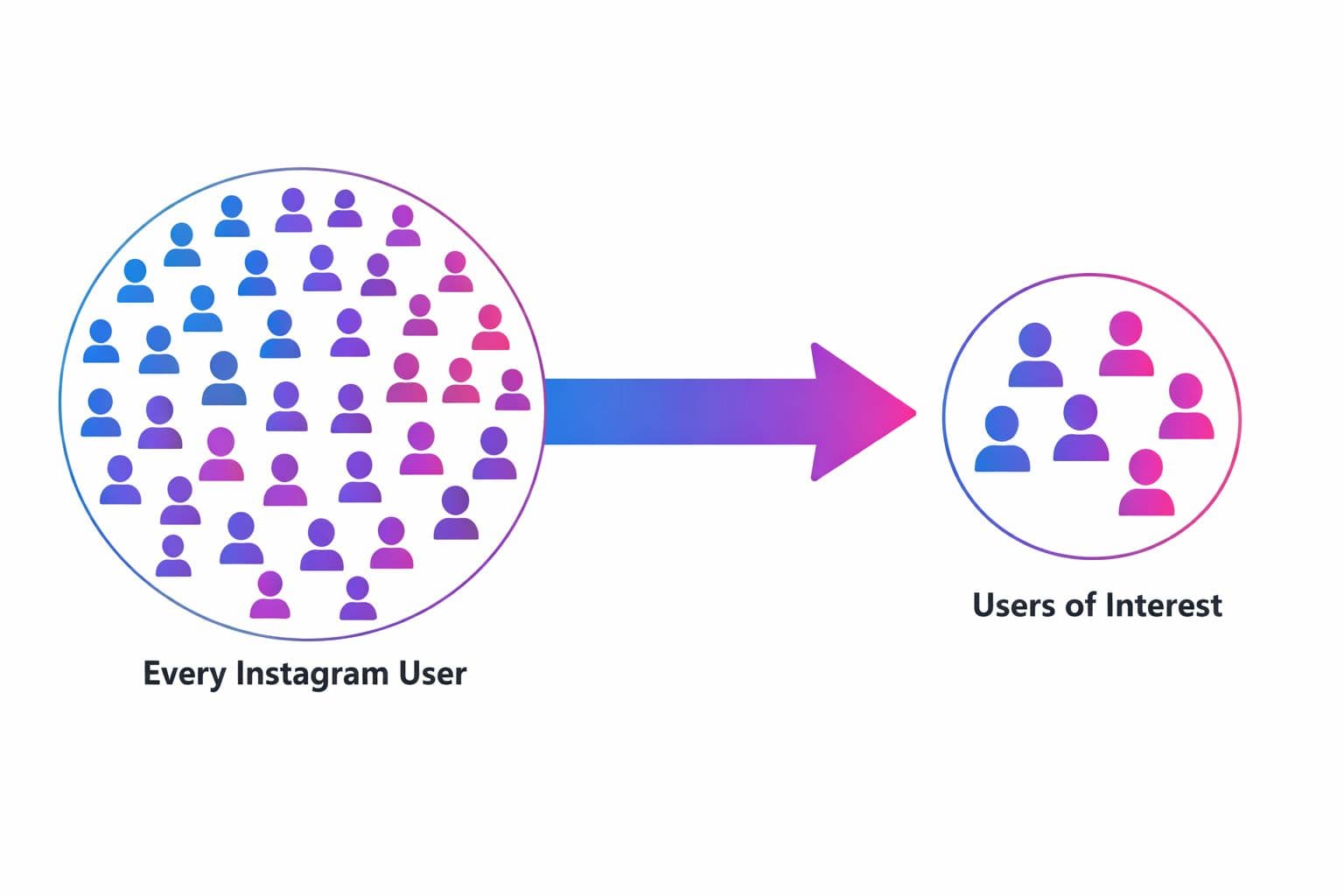
In order to get this selection, Instagram uses a variety of methods:
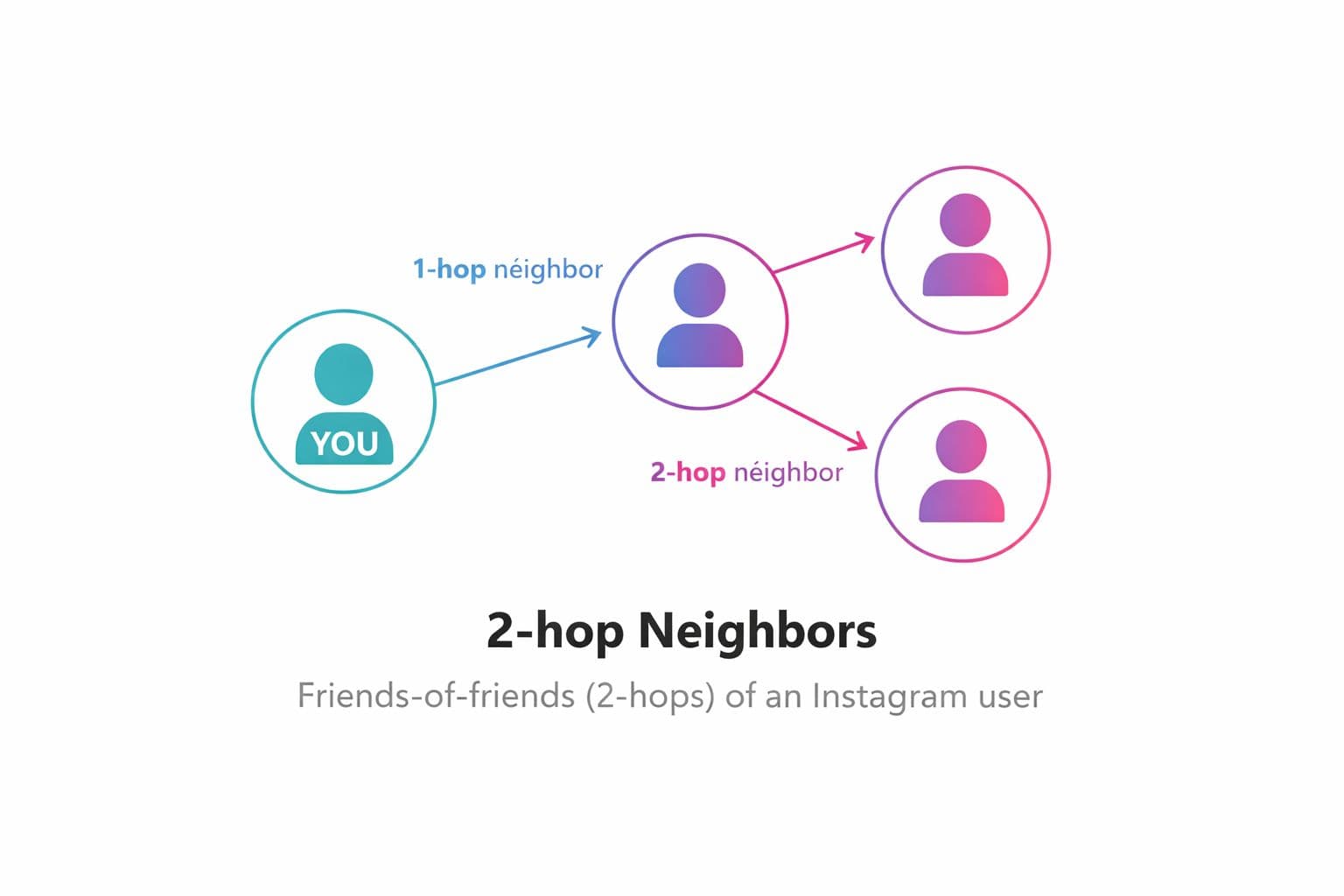
Social Graph - This is useful if you already have a certain number of people you are following. Instagram will look at each person you follow, and then from there look at each person they follow—essentially looking at your mutuals’ mutuals.
In computer science lingo, this is referred to as your 2-hop neighbours.
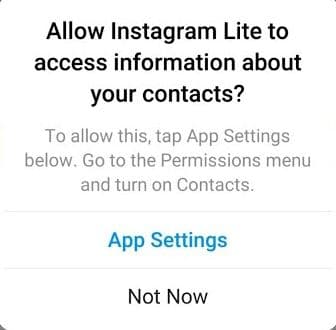
Contact-Based - You might have seen this notification pop up a few times when you use Instagram:
If you give Instagram permission, another way they can find a list of potential candidates to suggest is by going through your contacts and finding out if any of them also have an Instagram account.
Co-Engagement - Instagram keeps track of posts you’ve interacted with (liked, shared, commented on). If you are interacting with posts that another user is also interacting with, Instagram will select that account as a potential candidate.
Search - This one is quite self-explanatory. Any account you have searched for recently will also be considered as a potential candidate.
Geo-Based - If you have your location enabled on Instagram, they may decide to select accounts that have interacted with location-based content (for example, posts that have a location set near you) that are in your location.
This will bring down the pool of accounts that Instagram could suggest to you to a much smaller number, but it will still be in the hundreds or thousands—as mentioned earlier.
Instagram usually only suggests a few accounts. The reason they suggest these accounts is because Instagram believes you have the highest probability of following them.
In the next steps, we explore how they come up with this probability.
Step 2 - Feature Building
Now that Instagram has a list of potential accounts to suggest, they want to work out the probability you will follow the account if they suggest it.
To get an accurate probability, they will need some information about you and the account they want to suggest.
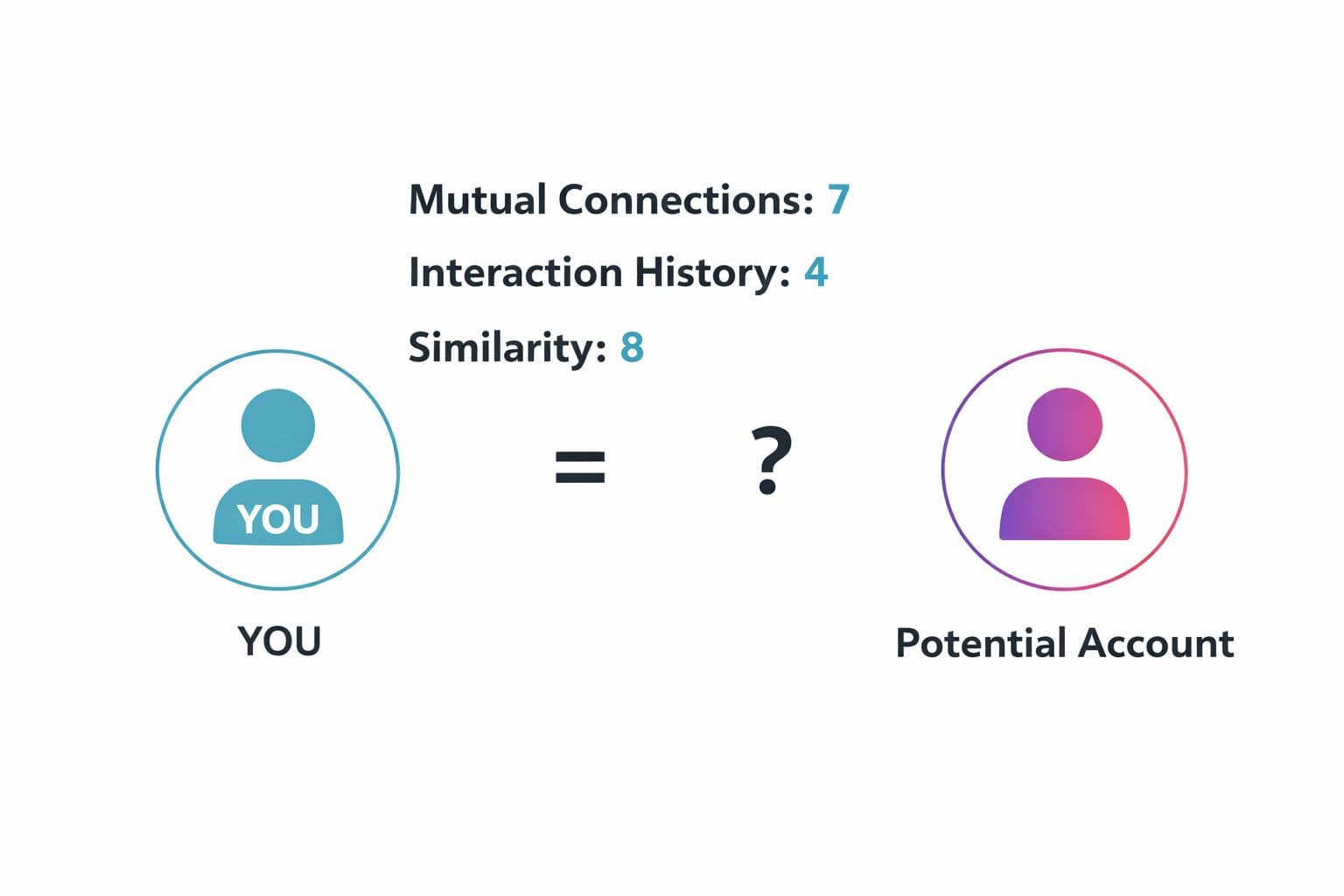
Instagram begins by pairing your account with a potential candidate (any of the accounts they got from the previous step).
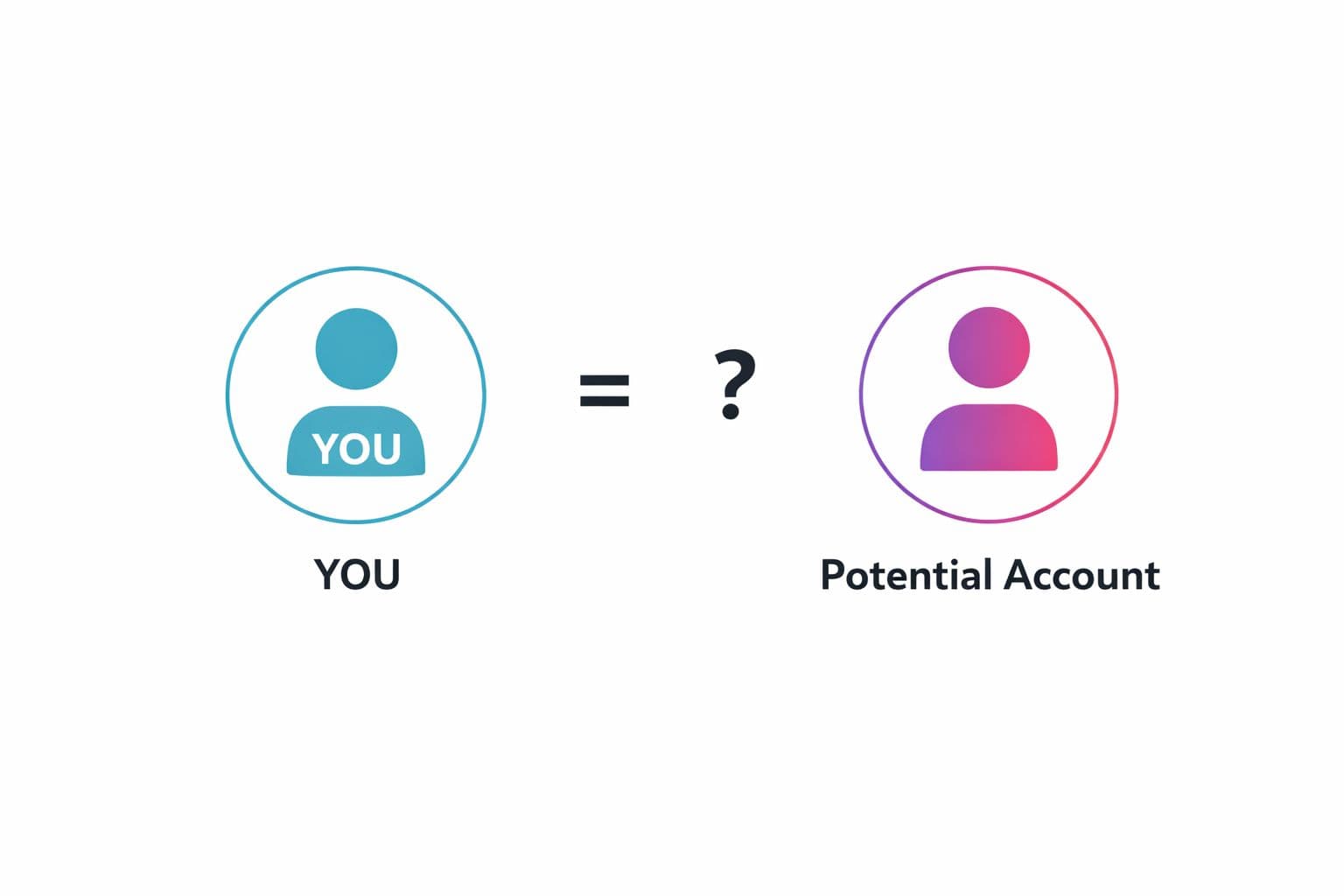
They will then start adding attributes to each pair; i.e., they will use numbers to represent the relationship your account has with the potential candidate. Examples include:
- Mutual Connections: Whether your account and the other share mutuals
- Interaction History: Whether either of you have recently viewed the other’s account, messaged each other, or liked/commented/shared a post on the other’s account
- Similarity: The shared interests both accounts have. This is inferred from the type of content each interacts with. It can also be based on profile similarity, i.e., language, region, etc.
Step 3 - Ranking - Where the magic happens
This step is where all the magic happens.
Instagram will use a machine learning model to help them here. If you don’t know what a machine learning model is, just think of it as a computer program or app.
For those who aren’t very technical, a simple way to think of a program that uses machine learning is one where it mimics the human way of thinking in order to make a decision or prediction.
This machine learning model is designed to answer the question:
“What is the probability that the given account (your account) will request to follow this potential candidate account?”
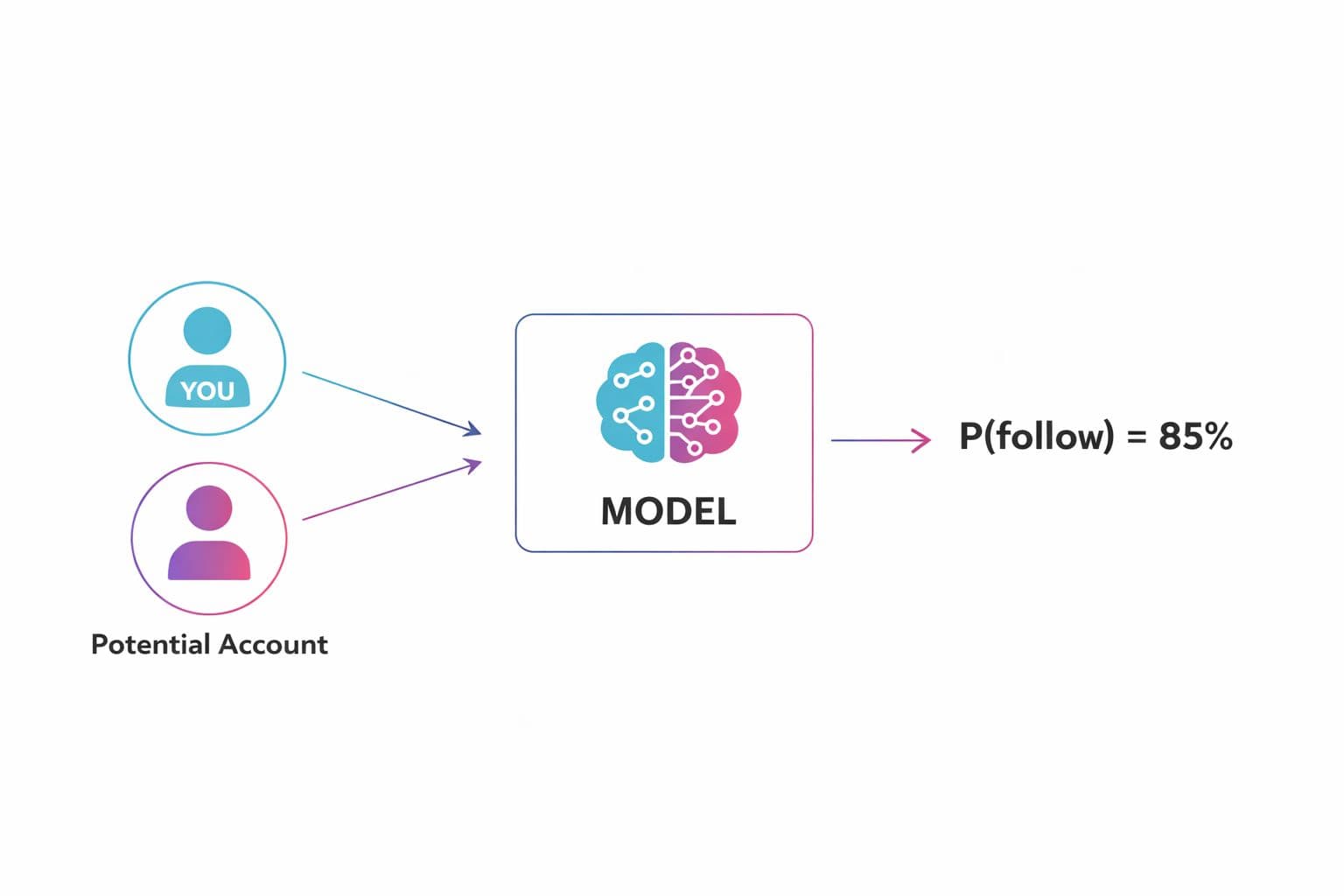
It will get this probability using the attributes it retrieved from the previous step. For example, if all three—Mutual Connections score, Interaction History score, and Similarity score—are high, you would expect the model to return a high probability.
If the probability is above a certain percentage, then Instagram will suggest the account to you.
For example, it will suggest all accounts where the model found that there was more than a 40% chance that you would follow the account.
As mentioned, a machine learning model attempts to mimic a human way of thinking in order to make decisions. Part of this means that it will adapt the probabilities it produces based on your behaviour. For example:
If you always seem to follow accounts where you have recently liked one of their posts, then the model will begin to put more importance on the Interaction History score it computed in Step 2. Therefore, if you have a high Interaction History score with an account, it will increase the probability that you will follow that account.
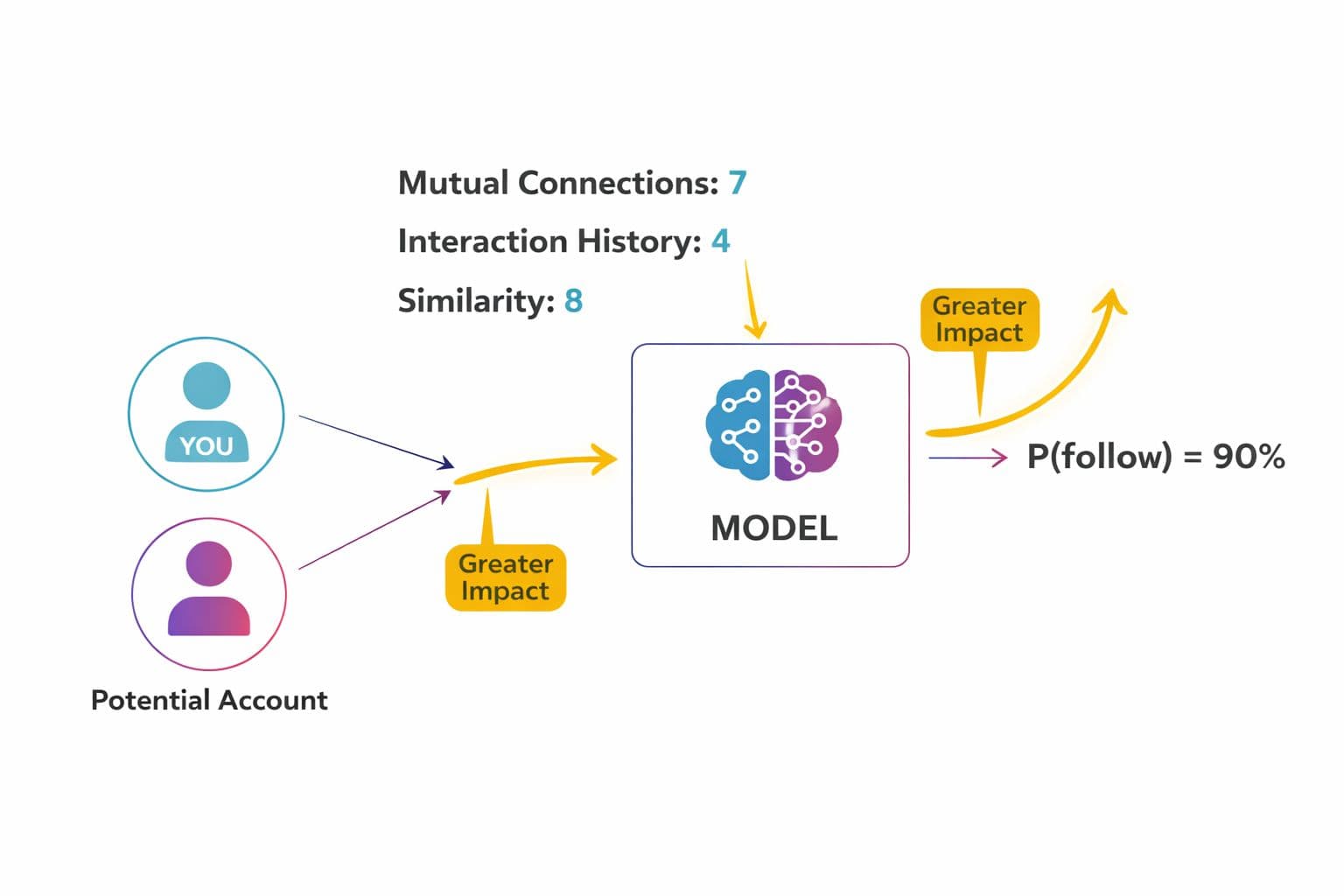
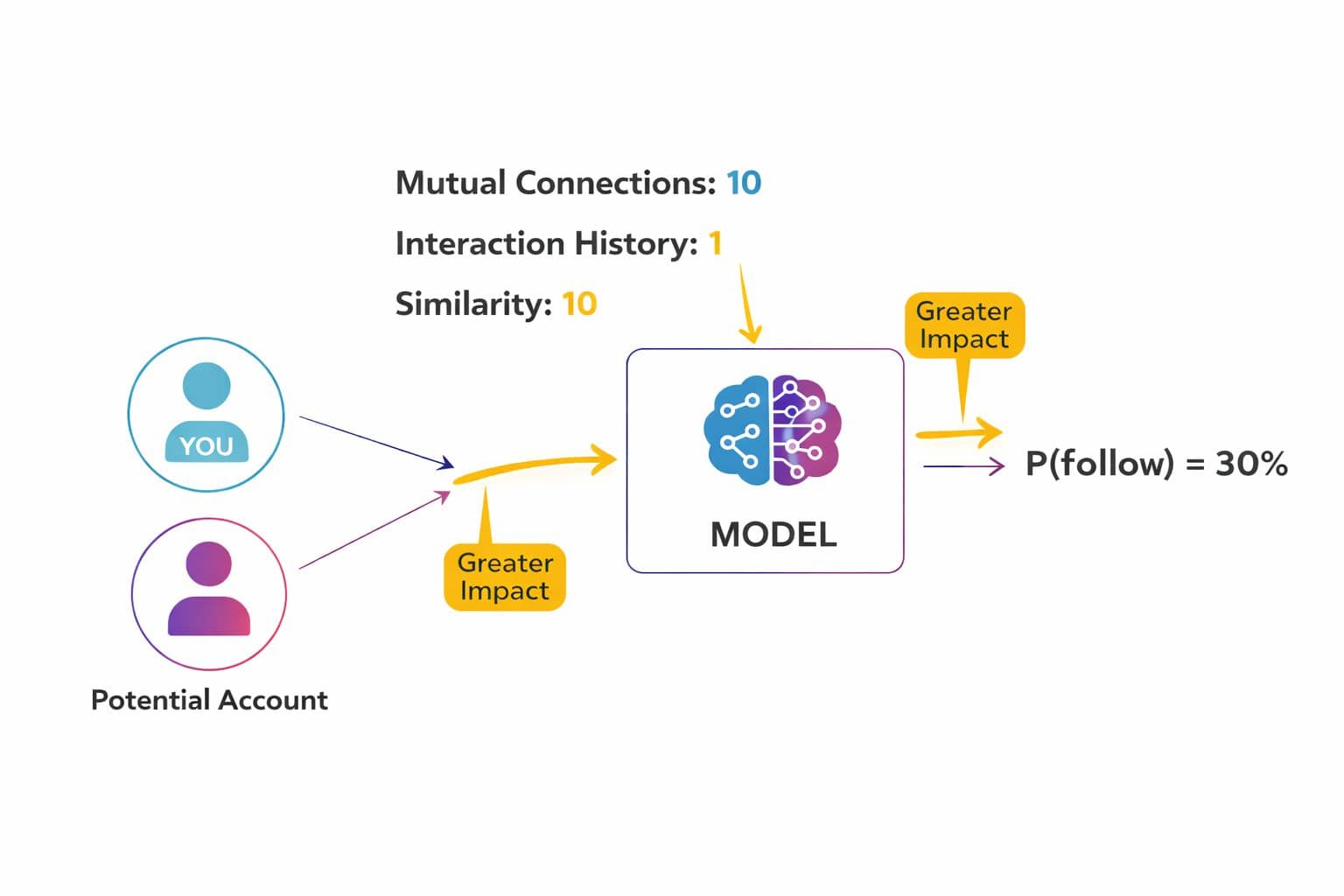
These two images highlight this concept quite well. In the second photo, you can see that despite the fact that Similarity and Mutual scores went up, the probability of a follow went down significantly because the Interaction score went down—the model puts a lot more importance on this score because it has seen from past behaviour that you generally follow suggested accounts when you’ve interacted with them.
Step 4 - Training Data & Feedback Loop
We kind of touched on this in the last point of the previous step.
Depending on what you do when an account is suggested to you, the machine learning model will update its behaviour.
For example, I mentioned in the last step that if you had a tendency to always follow an account where the Interaction History score between you and the account was high, the model would increase the probability that you would follow that account.
However, let’s assume that you decided you didn’t want to follow any more new people—maybe you’re insecure about your follow-to-following ratio. Instagram and its model will put less emphasis on the Interaction History score when calculating the probability that you would follow that account.
To summarise, Instagram is constantly using your behaviour as feedback to determine how it should go about suggesting accounts.
Summary
Hopefully now you have a bit of a better picture of how social media apps determine who to suggest to you—and hopefully you won’t be creeped out next time they make an oddly specific suggestion.
You can even try playing with the suggestion system on Instagram. Search for some accounts, interact with posts, comment on location-specific content—you will most definitely start seeing these accounts being suggested to you.
It can be quite powerful knowing how these mechanisms work, especially if you want to build a social media presence. For example, if you’re a business offering a service in your local area, exploiting the fact that Instagram uses location to suggest accounts may lead to many target accounts being recommended to your business profile.
If you would like to know more about using such solutions to build your business’s social media presence to do things like generate leads, contact us at tekvasolutions@gmail.com or visit tekvasolutions.com/consultancy for more information.